Clarity and alignment
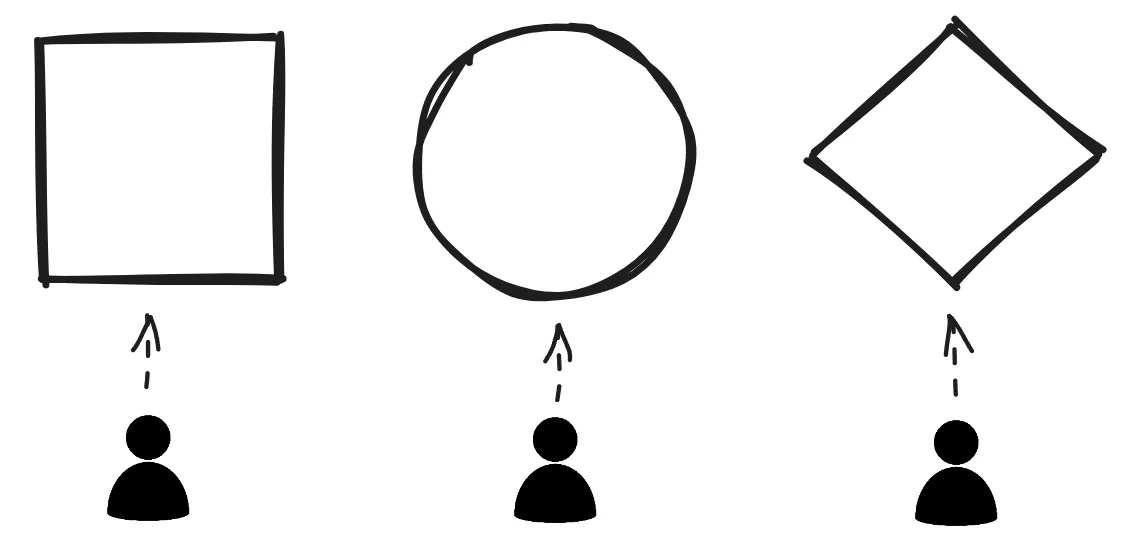
Where should you spend your finite time and energy as a product manager? It's a big and scary question. As ever, sometimes it's easier to think about all the ways you can make things worse - then avoid them like the plague. In my experience, the absolute killer of momentum, productivity - and sometimes entire projects is ambiguity.
Choosing what to focus on
A lack of clarity can creep in and sabotage your progress in a thousand small ways. You never want to hear your team, your stakeholders or your users utter the dreaded words: "I don't get it."
The best product people I've worked with are clarity-creating machines.
They articulate a specific, robust, detailed and believable picture of the thing you're collectively trying to drag into reality. They accept and embrace healthy challenge and push back, and use it to strengthen their ideas.
Most importantly - they don't assume clarity gets created by accident.
How to make things clear
You can't create clarity if you don't understand the nature of the thing yourself. You should be able to articulate coherent answers - not from memory, but from first principles - to:
- Who your thing is for (your users)
- The problems they face
- Which of their problems you'll solve, and which you won't (or won't yet)
- The specific way you'll solve them
- How you anticipate they'll use it day to day
- What it's replacing or integrating with
- Why you're solving a particular problem in a given way
- The tech stack (and why that's the tech stack)
- The wider landscape (trends, players, context)
- ... and on and on
There is no single framework you can use to understand the answer to these questions - and there are many more questions you should probably know the answer to, depending on your context.
What works for me is taking my time to properly read, understand and analyse existing research, speaking to your users and stakeholders and listening, synthesising your learnings into some kind of structured thing (a report, a visual, a presentation, even a well-written email will do), drawing stuff on a whiteboard - and talking it through with whoever will listen on walks, in meetings, or over a coffee.
Avoid trying to sound clever. Abstract concepts ("leveraging strategic value creation opportunities") are notorious for creating uncertainty. Expressing your ideas clearly, simply, and directly is challenging but necessary.
As Steve Jobs said:
"Simple can be harder than complex: You have to work hard to get your thinking clean to make it simple. But it's worth it in the end because once you get there, you can move mountains."
You can't move mountains alone
It's very rare you can ship something complex completely untethered from the wider organisation. Many PMs try and start the leg work of "aligning" their teams and their stakeholders without having a clear idea themselves of what they're doing.
Image trying to direct a film where the cast have different scripts, understand different versions of the plot, even where the film is set or whether it's a comedy or thriller. It'd be a mess.
First, you've got to "get it" - or you'll just add to the confusion. Only then can you can help others "get it" - and once they do, you can get them pulling in the same direction, aligned around a clear, shared understanding of what you're trying to achieve.
This article from Brian Halligan on Sequoia contains a great visual that represents this concept nicely.
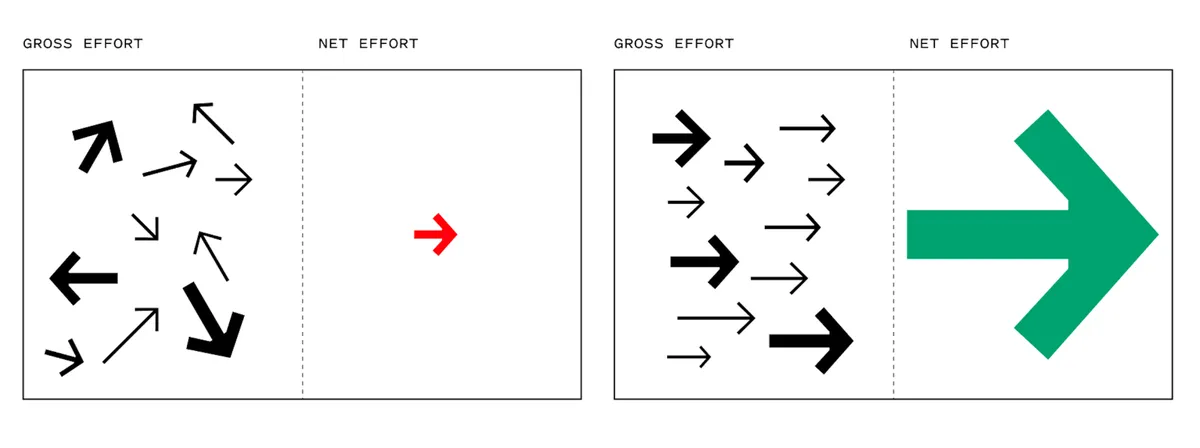
The clearer your vision, the stronger the alignment, the easier it is to point people in the same direction.
Alignment is downstream from clarity
The best product people relentlessly focus on creating clarity and stamping out ambiguity in whatever way they can.
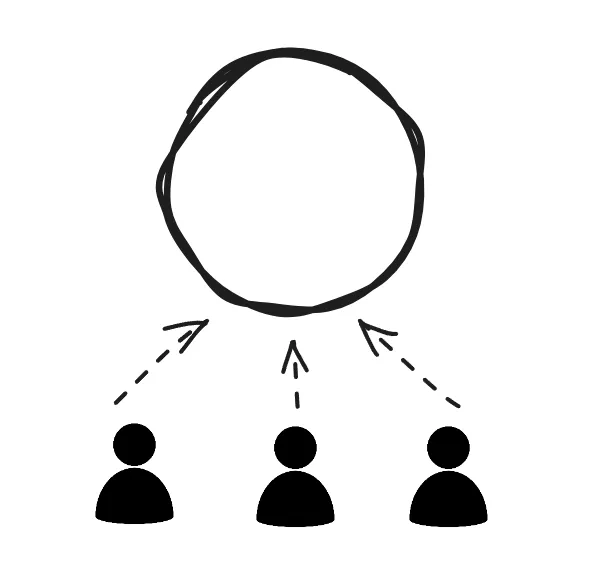
In doing so, they build an environment where it's easy for the team, stakeholders, leadership and the organisation at large to get aligned and stay aligned - which gives you the best chance of getting where you want to go.